Written by the teaching team at YMB Yoga School in Klungkung, Bali.
Pranayama offers a wide array of benefits by consciously controlling the breath, which directly influences the nervous system. Regular practice can lead to reduced stress and anxiety, improved mental clarity and focus, enhanced respiratory and cardiovascular health, better sleep quality, and a deeper sense of emotional balance and self-awareness. By exploring this ancient yogic tool, you can access a simple yet powerful method for supporting your overall well-being.
What is Pranayama? The Ancient Art of Breath Control
Pranayama, derived from Sanskrit, is the yogic practice of controlling the breath, aiming to extend and regulate ‘prana’ or life force within the body. It is a foundational pillar of yoga, serving as a bridge between the physical postures (asana) and the deeper states of mental concentration and meditation. More than just a set of breathing exercises, pranayama is the conscious direction of your body’s most vital resource.
Prana and Apana: The Vital Life Force
The word pranayama is a combination of two Sanskrit words: ‘prana’, which means life force or vital energy, and ‘ayama’, which means extension or regulation. Therefore, pranayama is the intentional management of your energy. Yogic philosophy divides this energy into different currents, with ‘prana’ representing the incoming, energizing force of inhalation, and ‘apana’ representing the outgoing, grounding force of exhalation. The goal is to bring these two forces into balance.
Ancient yogic texts suggest that the length of a life is measured not in years, but in the number of breaths. This wisdom is reflected in the natural world; an elephant, for example, takes about 4 to 6 slow breaths a minute and can live for 60 to 70 years (R2), while a dog breathes 15 to 30 times a minute and lives for around 10 to 15 years (R1). Slowing and deepening the breath is therefore associated with longevity and vitality.
Pranayama in the Eight Limbs of Yoga
Within the classical system of Ashtanga Yoga laid out by the sage Patanjali, pranayama is the fourth of the eight limbs. It follows the ethical principles (Yamas), personal observances (Niyamas), and physical postures (Asana). Patanjali defines pranayama as the “cessation of the movement of inhalation and exhalation,” a practice that steadies the energy currents and makes the mind fit for concentration (R7).
By practicing pranayama, you prepare the mind and body for the subsequent, more internal limbs of yoga. It is the crucial link that leads to Pratyahara (withdrawal of the senses), Dharana (concentration), Dhyana (meditation), and ultimately, Samadhi (a state of absorption). It purifies the body’s energy channels, or nadis, and quiets the mind’s constant fluctuations, creating the stability needed for true meditative stillness.
The Scientific Basis: How Pranayama Transforms Your Physiology
The effects of pranayama are rooted in its direct influence on the autonomic nervous system, primarily by stimulating the vagus nerve and optimizing respiratory efficiency. This is not just ancient wisdom; modern science is beginning to map the specific physiological changes that occur when we consciously control our breath, validating what yogis have known for centuries.
Activating the Parasympathetic Nervous System
One of the most significant advantages of yogic breathing comes from its ability to activate the parasympathetic nervous system, which governs the body’s “rest and digest” response. Slow, deep breathing sends a signal to your brain that you are safe, counteracting the “fight or flight” stress response of the sympathetic nervous system. A 2018 study by Zaccaro et al. found that slow pranayama techniques increase heart rate variability (HRV), a key indicator of parasympathetic activity and your body’s ability to adapt to stress (R9).
Optimizing Respiratory and Cardiovascular Function
Pranayama does more than just calm the mind; it improves the mechanical function of your breath. According to research by Russo et al. in 2017, slow, full breathing improves the efficiency of ventilation and helps balance carbon dioxide (CO2) levels in the blood (R11). This balance is essential for proper pH levels and overall cellular health. Better respiratory efficiency means your body’s cells and organs receive a more consistent supply of oxygen, contributing to increased vitality. Furthermore, this has a positive effect on cardiovascular health. Studies have shown that slow breathing practices can lead to modest reductions in blood pressure, offering a helpful complement to medical treatments for hypertension (R10, R15).
The Mind-Body Connection through Breath
The breath is unique because it is both an automatic and a voluntary function. While the brainstem controls your breathing without you thinking about it, the cerebral cortex allows you to consciously take over at any time (R6). This dual control provides a direct pathway to influence physiological processes that are normally unconscious. By intentionally changing the rhythm and depth of your breath, you can directly influence your brainwave patterns, heart rate, and nervous system state, demonstrating the powerful, two-way connection between mind and body.
Key Health Benefits of Regular Pranayama Practice
Regular pranayama practice yields a wide array of health advantages, including marked stress reduction, enhanced mental clarity, improved cardiovascular health, and greater emotional resilience. By dedicating just a few minutes each day to conscious breathing, you can support nearly every system in your body.
Reduces Stress and Anxiety
Pranayama directly counteracts the body’s physiological stress response. As confirmed by a 2018 review, slow breathing techniques can bring small to moderate reductions in perceived stress and anxiety levels (R9). This makes it an exceptionally practical tool for navigating the pressures of daily life. To build on this, you can complement your pranayama practice with other stress reduction techniques.
Enhances Mental Clarity and Focus
By calming the nervous system and improving oxygen delivery to the brain, pranayama helps sharpen concentration and memory. A mind that is not distracted by a stress response is a mind that is free to focus. This heightened cognitive function can improve your productivity, learning capacity, and ability to remain present.
Supports Heart Health and Regulates Blood Pressure
The positive effects of breathwork on the cardiovascular system are well-documented. A 2024 systematic review and meta-analysis of 15 studies reported modest reductions in both systolic and diastolic blood pressure following breathing exercise interventions (R15). Additionally, another systematic review from 2026 confirmed pranayama’s positive impact on several markers of cardiovascular health (R14).
Improves Sleep Quality
If you struggle with sleep, calming pranayama techniques can be a great help. The relaxation induced by practices like Diaphragmatic Breathing or Brahmari helps to quiet the mind, regulate sleep cycles, and ease the transition into a deeper, more restorative night’s rest.
Boosts Emotional Balance and Resilience
By creating a pause between an external trigger and your internal reaction, pranayama fosters emotional regulation. Consistent practice helps you observe your emotional states without being swept away by them, allowing you to respond to life’s challenges with greater equanimity and less reactivity.
Strengthens Respiratory System and Lung Capacity
Pranayama is a workout for your respiratory muscles. Techniques that emphasize deep, full breaths strengthen the diaphragm and intercostal muscles. This leads to an increase in vital lung capacity and improves the overall efficiency of your respiratory system, which is fundamental to your energy and stamina.
Cultivates Mindfulness and Self-Awareness
At its core, pranayama is a practice of focused attention. By bringing your awareness to the subtle sensations of the breath—the temperature, the texture, the rhythm—you anchor yourself firmly in the present moment. This repeated practice cultivates a state of mindfulness that can extend into all areas of your life.
Essential Pranayama Techniques for Beginners
For beginners, starting with simple yet powerful pranayama techniques like Diaphragmatic Breathing and Nadi Shodhana can introduce the experience of breath control. These foundational practices are accessible to everyone and offer immediate effects. Always begin your practice in a comfortable seated position with a tall spine (R3).
| Technique | Instructions | Primary Benefit |
|---|---|---|
| Diaphragmatic (Belly) Breathing | Sit comfortably or lie on your back. Place one hand on your chest and the other on your belly. Inhale slowly through your nose, allowing your belly to expand and rise. Your chest should remain relatively still. Exhale slowly, feeling your belly gently fall. | Activates the parasympathetic nervous system (R16), inducing relaxation and reducing stress. |
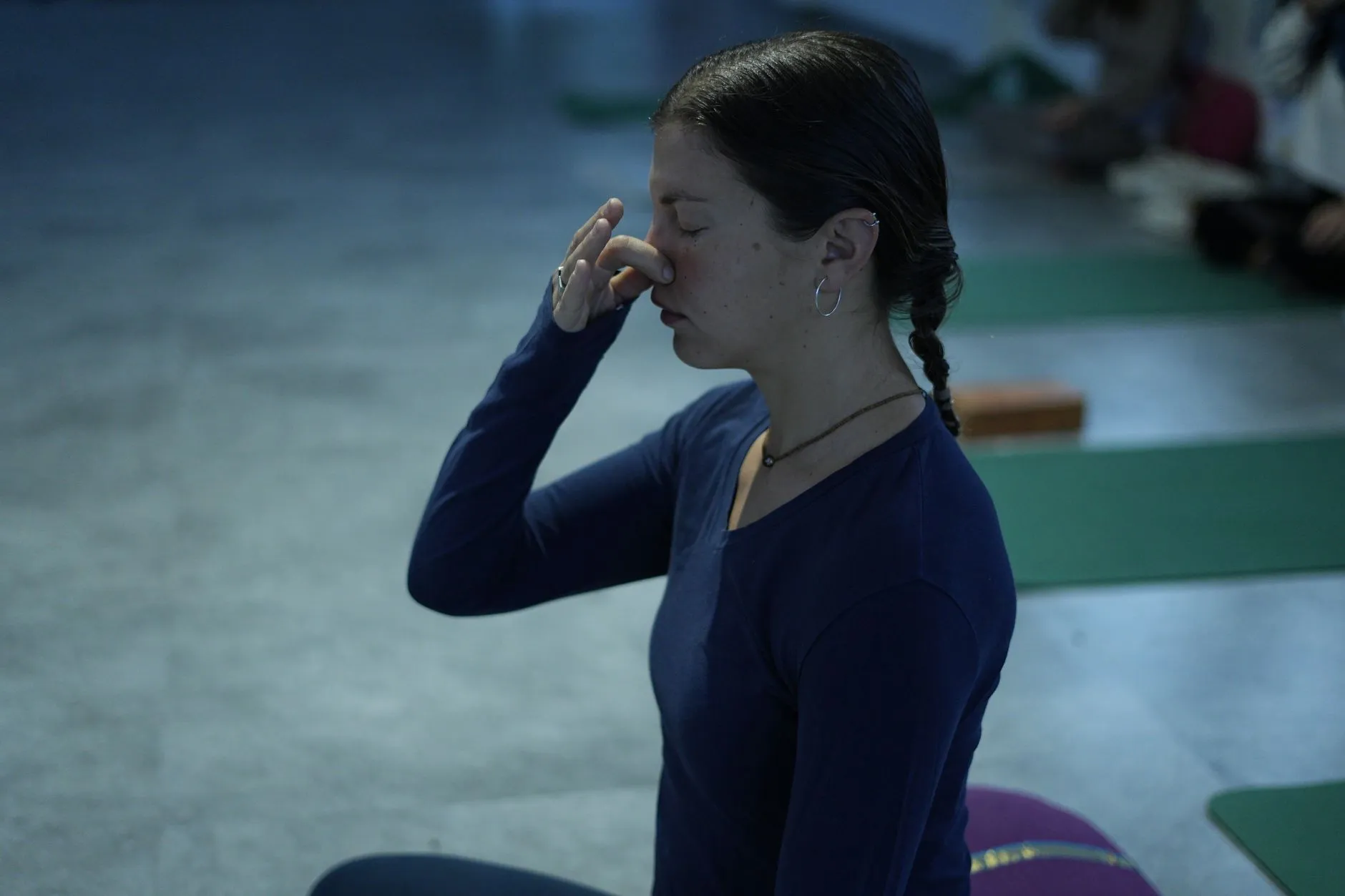
| Nadi Shodhana (Alternate Nostril) | Sit with a tall spine. Rest your left hand on your left knee. Bring your right hand to your face and gently fold your index and middle fingers. Close your right nostril with your thumb and inhale slowly through the left nostril. Close the left nostril with your ring finger, release your thumb, and exhale through the right nostril. Inhale through the right, then close it and exhale through the left. This completes one round. Continue for several rounds. | Balances the left and right hemispheres of the brain, calms the mind, and improves focus. |
| Brahmari (Humming Bee Breath) | Sit comfortably and close your eyes. You can gently close your ears with your thumbs. Inhale deeply through your nose. On the exhale, keep your mouth closed and make a low-pitched, steady humming sound, like a bee. Feel the vibration in your head and chest. Continue for 5-10 breaths. | Calms the nervous system, soothes the mind, and can help alleviate tension headaches. |
Ready to Train in Bali?
YMB Yoga School in Klungkung runs monthly intakes for its Yoga Alliance-certified courses: the all-inclusive 200-hour training from $1,450 (23 days) and the 300-hour from $2,400 (28 days). A $380 deposit secures your spot.
To explore a wider array of breathwork techniques, you can continue your learning with a qualified teacher.
Practical Advice for Your Pranayama Journey
Integrating pranayama into your daily routine requires consistency, mindful awareness, and a gradual approach to ensure safety and maximize its positive effects.
Starting Your Practice Gradually
It is best to begin with short sessions. Just 3 to 5 minutes a day is a great starting point (R3). Focus on mastering one technique, like Diaphragmatic Breathing, until you feel comfortable and can observe its effects on your mind and body. Remember that consistency is more important than duration; a short daily practice is more beneficial than a long session once a week.
Safety and Precautions
Always listen to your body. Pranayama should feel calming and centering, not stressful. If you experience any dizziness, lightheadedness, or shortness of breath, gently stop the practice and return to your normal breathing. Avoid forcing or straining the breath.
It is important to practice in a quiet, well-ventilated space, preferably on an empty stomach or at least a few hours after a meal. Individuals with certain health conditions, such as severe heart problems, uncontrolled high blood pressure, or respiratory disorders, should consult both a healthcare professional and a qualified yoga instructor before starting a pranayama practice.
Integrating Pranayama into Daily Life
Find a time that works for you. You might try a few minutes of energizing breathwork in the morning to set a focused tone for the day, or a calming practice in the evening to unwind and prepare for sleep.
The beauty of breathwork is that you can do it anywhere. A few conscious breaths before a meeting or during a stressful moment can make a significant difference.
Deepening Your Practice
Pranayama is a practice that unfolds over a lifetime (R17); the advantages deepen with sustained and mindful effort. To truly deepen your understanding and practice, or even learn to share these ancient teachings with others, consider formal training. A comprehensive Yoga Teacher Training program, like those offered at YMB Yoga School in Klungkung, Bali, provides in-depth instruction in pranayama, philosophy, and practical application.
Frequently Asked Questions
How often should one practice pranayama?
For beginners, practicing pranayama for 5-10 minutes daily is an excellent start (R3). The most important factor is consistency, as a short daily practice is more effective for rewiring the nervous system than infrequent, longer sessions. As you become more comfortable, you can gradually increase the duration and explore different techniques.
Is pranayama suitable for beginners?
Yes, pranayama is highly suitable for beginners, as long as they start with simple and gentle techniques. Practices like Diaphragmatic (Belly) Breathing are perfect for beginners because they teach foundational breath awareness and activate the relaxation response (R16). It is always recommended to learn from a qualified instructor to ensure correct form and avoid strain.
How does pranayama help reduce stress?
Pranayama reduces stress by directly influencing the autonomic nervous system. Slow, controlled breathing activates the parasympathetic branch, triggering the body’s ‘rest and digest’ response (R9). This process helps lower heart rate, reduce blood pressure, and decrease the production of stress hormones like cortisol. The focus on the breath also serves as a mindfulness practice, helping you detach from stressful thought patterns.
What is the difference between pranayama and meditation?
While both are yogic practices involving mental focus, pranayama is specifically the conscious regulation of breath. Meditation is a broader practice of cultivating focused attention or open awareness, often using the natural breath as an anchor but not typically manipulating it. In Patanjali’s system, pranayama is seen as a key preparation for meditation (R7), as it calms the body and mind, making it easier to enter deeper, more stable meditative states.
We hope this exploration of pranayama’s advantages inspires you to connect with the power of your breath. For those seeking to deepen their study of yoga and breathwork, YMB Yoga School provides authentic training experiences in the unique setting of Bali.